Duels
Skill-focused bouts with standardised weapons: sword and buckler, longsword, polearm.
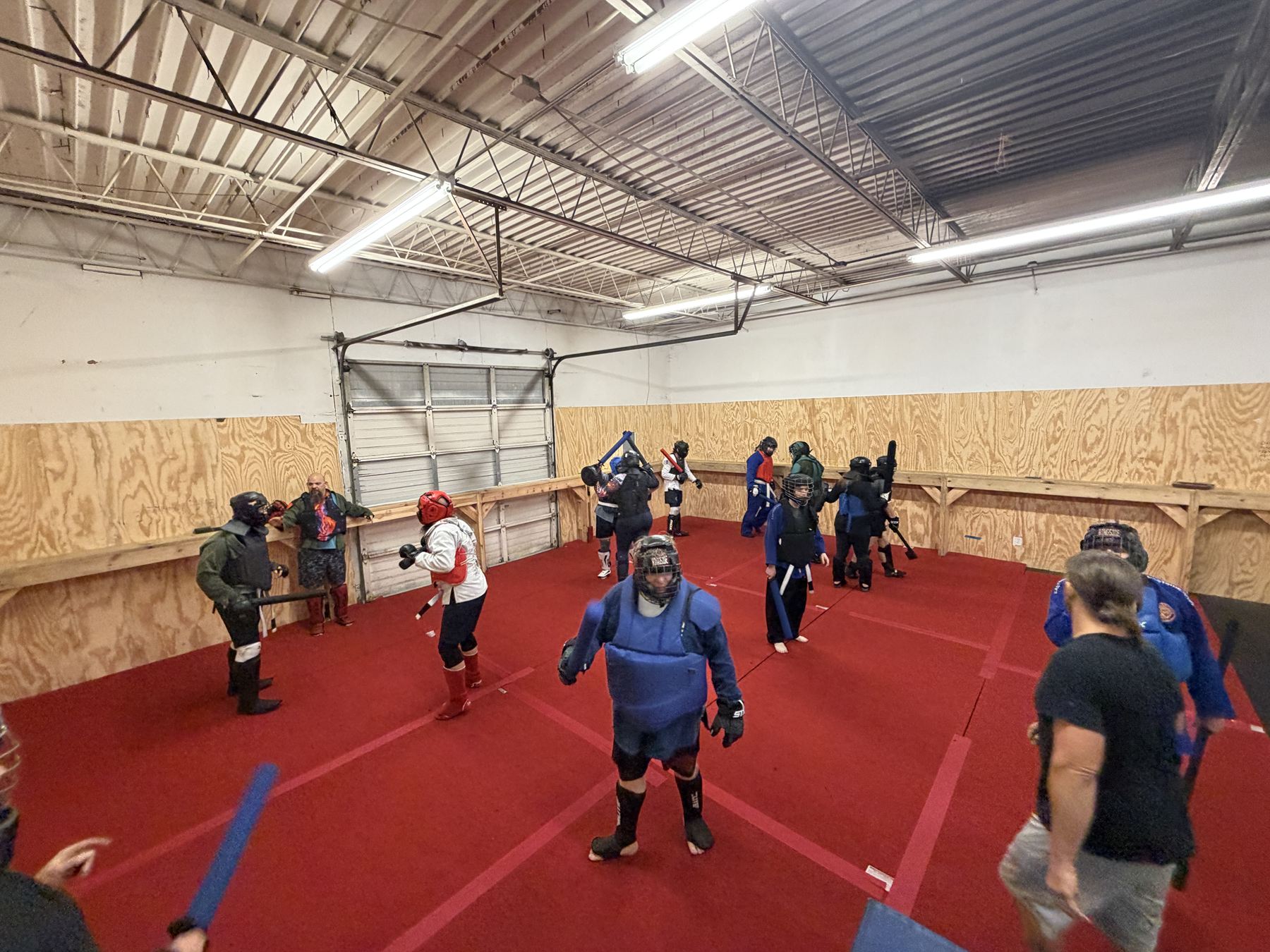
Buhurt is a full-contact medieval armoured combat sport, fought with steel weapons under modern safety rules. Under Buhurt International, fighters wear historically inspired armour and compete as individuals or teams, aiming for clean strikes, control and takedowns. It is not choreography, and it is not reenactment.
Skill-focused bouts with standardised weapons: sword and buckler, longsword, polearm.
Heavier contact, fewer restrictions, higher intensity.
Squad combat. The last team with a fighter standing wins.
Larger teams, with the emphasis on teamwork, positioning and endurance.
Don’t buy armour yet
Team melees are the heart of buhurt, and nothing else in combat sport looks like them. The most common format is the 5v5: movement, striking for effect, teamwork and, above all, grappling, all in full armour. Winning takes skill, endurance, strength and strategy in equal measure.
Teams line up on their own sides of the list, a rectangular fenced arena, facing each other. On the marshal’s call the fight begins and the teams engage.
BI melee format
A fighter is down when
Downed fighters stay still until a marshal says otherwise. Other leagues differ in the details; some count three points of contact instead.
Marshal calls
Never strike
Armour requirements
Also worth knowing
This is a summary, not the full ruleset, and leagues differ in small but important ways on techniques, armour and weapons. Fighters are expected to know every rule for the league they compete in. Full BI melee rules (PDF)
Bigger formats (10v10, 12v12, 16v16, 30v30 and up) play a different game because of the field size and the list. A 5v5, though, usually lines up with two fighters on each side of the rail, left 1 and 2 and right 1 and 2, plus a single fighter roaming the field: the 3. There are exceptions, but this is how most teams set up. Most new fighters start on the rail.
On the rail
Rail fighter
Stands directly on the rail. Needs to be a talented grappler, big, or ideally both. A good team is built from the 1 outward. Almost always carries a one-handed weapon.
“Be the potato.”
Don’t waste energy. Being the 1 is about grinding your opponent down as lazily as possible. Stay loose: hard to move, but never locked at full tension. This isn’t MMA, where one-handed strikes can knock you out, or wrestling, where you stay at max tension the whole match. Everyone weighs far more in armour and momentum is higher, so save explosive effort for throws and for winning the hand fight in the clinch.
The 1 isn’t really a playmaker. The job is to stay up, burn the other 1’s energy, and set up your 2, with strikes or by trading up into better grappling positions such as a head rip. Take opportunities as they come, but don’t force them.
Behind the 1
Wing or guard
Stands behind and slightly field-side of the 1, supporting the rail. Carries a one or two-handed weapon to suit their partner’s style.
“Diet 3.”
The 2 keeps the 1 safe, shielding them from strikes and breaking them out of bad positions. With a two-hander the 2 can strike for effect, wearing an opponent down rather than trying to drop them in one or two hits, and should always be watching for a play. Head rips and cross checks are usually the safest options.
Together the 1 and 2 work to drag the opponent’s field-side arm over to their side, spend as little time as possible reaching across themselves, and win dominant clinch and grappling control. Striking, hooking with weapons, and grabbing and pulling shields are easy, low-energy ways to get there.
The floater
Center
Works the middle of the field: flanking, supporting and roaming. Usually the most experienced fighter, in the lightest kit they can wear, carrying a two-handed axe or polearm about 80% of the time.
“Head on a swivel.”
The 3 is the x factor: causing chaos or breaking the other team’s positioning, looking for quick and easy takedowns, cancelling out the opposing 3, and watching the whole field for openings. It is the most dynamic and dangerous position in the list, and it demands speed in both movement and decision making.
Watch the 3s on high-level teams to see how many playstyles there are. Some teams with big, strong rail grapplers even run two 3s, though that is uncommon.
What to train in before you own any armour. It protects you while you learn strikes, grappling and positioning. Purpose-built buhurt training kit is excellent but expensive; budget MMA and hockey gear works well as long as it covers what it needs to.
Start here
Also useful
Tips
Before you buy steel, find what you are copying. Period art and surviving effigies show what was actually worn, and these groups and boards are where fighters trade references.